
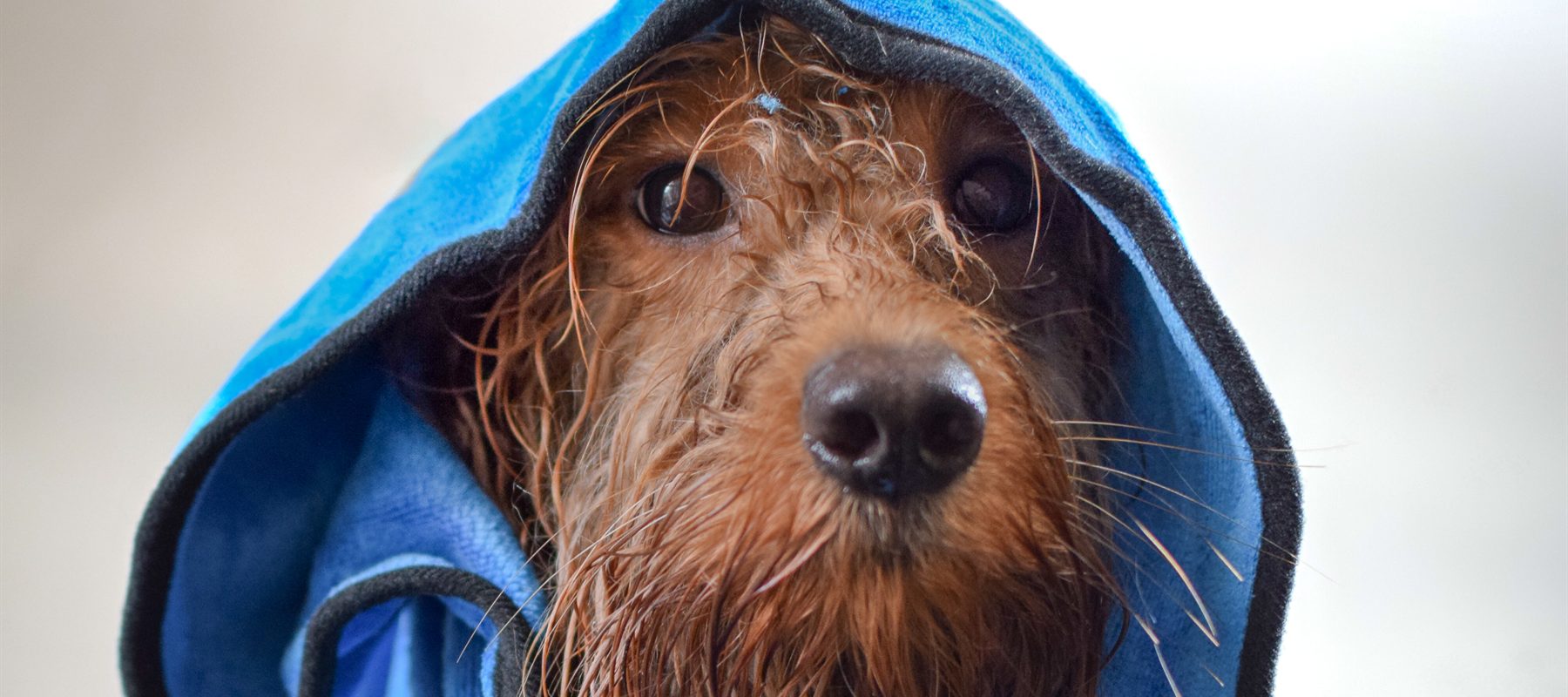
Groom at home
Helpful Guides
Your dog's wellbeing matters between appointments too. These guides cover the maintenance you can do at home — both for their mental wellbeing and their physical condition.
Brushing Different Coat Types
For a lot of breeds, brushing is imperative to your dog's overall health. Matting can cause significant discomfort and health issues, and encourages parasites and dirt to build up on your dog.
Some dogs require little to no brushing, others require it daily. Different coat types use different tools and techniques — ask Poppy which applies to your dog's coat.
Not sure how often your dog needs brushing? It varies by breed, clip length and how fast the coat grows. Ask at your next appointment.
Desensitising Your Dog
If your dog hasn't been to a groomer before, or if they struggle with stress or anxiety during grooming, desensitisation is a great way to help them.
For more information, Poppy recommends Taking The Grr Out Of Grooming by Sue Williamson — which has books, webinars, Facebook groups and more. You can also book your pup in for desensitisation sessions with Trusty Paws.
Sessions start at £15 for a 15-minute meet and greet, so your dog can get to know the salon with no pressure.
Trimming Nails
Cutting a dog's nails comes with its own challenges and risks, which is why a lot of owners opt to take their dog to a groomer for them — however it is very possible to do at home.
The key things to learn are how to tell when your dog needs their nails trimmed, and how to cut the different nail types safely without catching the vein.
If your dog is very anxious and can't stay still, or you're uncomfortable doing it yourself, a nail trim starts at £15.
Poppy also films short walkthrough videos covering each of these topics. Feel free to get in touch if you have any other questions.
Ask a QuestionCommon questions
Frequently Asked
New to grooming, or booking with Trusty Paws for the first time? Start here.
When should I start bringing my puppy for grooming?
As early as 12 weeks, after their second round of vaccinations, is ideal. The sooner the better to get them acclimated to the process and to prevent them from developing anxiety around grooming.
How often should my dog be groomed?
It's different for every dog. It varies depending on how short they get clipped during their groom, how fast their fur grows, what breed they are and how much you keep up with maintenance at home. It's best to do some research on your breed, or talk to your groomer.
Do I have to get my dog's nails trimmed by a professional?
No — for most dogs it can be very easy to do at home. Training them to stay still and accept their nails being done, as well as learning how to safely cut nails, can all be done at home.
However, if your dog is very anxious and can't stay still, or if you are simply uncomfortable trimming nails yourself out of fear of cutting the vein, it can be helpful to take them to a groomer.
How early do I need to turn up for my first appointment?
About 3 minutes early is ideal, but not essential. If it's your first booking and you'd like more time to discuss the groom, that is taken into account when scheduling out time for your appointment.
What should I do if my dog has fleas?
A few fleas can easily become an infestation if not taken care of properly. Firstly you should wash your dog with flea shampoo, then wash any clothes and other washable fabrics that have come into contact with the dog since getting fleas — 60° or higher is ideal. Deep clean your floors, especially rugs and carpets, and possibly also use a flea bomb or other treatment.
The outside of your house, your car, and anywhere else your dog has been should also be treated. For more specific details and help, it's a good idea to do your own research as this is a very brief overview.
What should I do if my dog is matted?
Brushing out matting can be incredibly painful for dogs, and in some cases just not possible to achieve. The best you can do for your pup is take them to a groomer who can wash, dry and clip the dog short using the best tools, to give you the best possible outcome while also prioritising the dog's wellbeing.
Sometimes the longer fluffy coat can be saved, but a lot of the time they will have to be taken short. You can think of this as a “fresh start”, where you begin with a healthy and knot-free coat — a lot easier and cheaper to take care of in the long run, even once it has grown out again.
Still have a question?
Whether it's about your dog's coat, their anxiety around grooming, or which service they need — just ask.